The union has eight sections and the Professionals, Finance and Services Section is one of them. This section protects and represents professional workers who are members of the GWU. These workers come from;
The workers who fall under this section are mostly office workers, most of them in the ranks of managers and professionals. There are establishments where all workers are members of the union, including non-clerical and blue-collar workers such as messengers and bank clerks. This section also represents the Security Personnel within the Central Bank. Any worker who falls under this section can become a member of the GWU, regardless of whether they have a full-time or part-time contract, a permanent contract or a fixed-term contract.
Any organization that has a majority of member workers at GWU (50% +1) gets recognition from the Department of Industry and Labour Relations (DIER). If there is another union that claims to have a majority, the department conducts the necessary reviews until it is determined which union has the confidence of the majority of workers.
In addition, the union may overrule the employee on an individual basis. This occurs in a case where the worker has suffered some type of injustice or abuse. The worker may also desire to be represented on a special and individual need basis.

The Section is an essential unit between the members and the GWU. The Section’s job is to work hand in hand with the members to improve working conditions. When members are not properly valued and employer rights are not respected, the Section comes in to fix things or it can even raise national awareness.
The union holds talks with employers to improve conditions for workers. It also submits budget proposals to further strengthen members’ rights.
Raising awareness of issues, strengthening members’ conditions and gathering support for local and international issues.
Supporting members for justice and equality in the workplace and even abroad. Fighting discrimination and equality are important values for the Union.

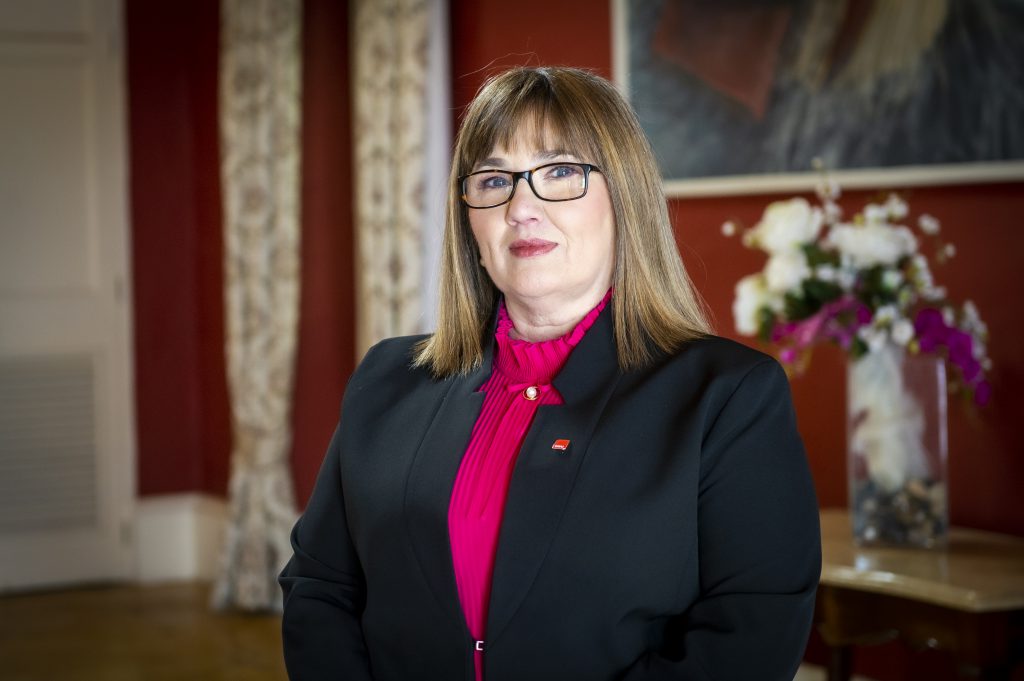
The Secretary of this Section is one of the two female Secretaries that currently exist in the Union. Her name is Riccarda Darmanin and she comes from a finance background. She was employed by the Bank of Valletta for thirty-two years in the management grade as a Financial Adviser, having spent much time in various branches and investment centres.
Riccarda was a long time member of the Bank of Valletta committee group and actively participated in the negotiation of the collective agreement. She has also participated in various conferences both in Malta and abroad on various issues, mainly in finance and citizens’ rights, so much so that she is currently pursuing a course at the University of Malta for a Diploma in Gender, Labour and Society. Two years ago she was nominated for the post of Section Secretary, which was unanimously accepted by the section delegates during the conference. Riccarda is also a member of the Executive Committee of Eurocadres, which represents P&MS in Brussels. Riccarda keeps up to date with current events, especially in the political scene. She loves to hike, travel, read and also watch movies. She has a big heart for animals, especially her dog Chevalier King Charles named Titch. She also volunteers the Community Chest Fund.
The Section was originally called NACSS (National Association for Clerical and Supervisory Staff). After several legal changes, the word National was changed to General. As a result, the name was changed to STPSA (Supervisory, Technical, Professional Staff Association). Recently, the name was changed again to what we now know as PFS (Finance and Services Professionals).
The aim of the section was to look after the needs of clerical workers, but over time, as the Maltese worker also began to move up in positions, the section began to welcome managers and even professionals who, although they had not joined a union in the past, now felt the need to turn to the union for help.
Over the years, the Section has brought many improvements in banking, media and various other institutions. The section is constantly on the lookout for new workplaces such as IT and gambling companies that are struggling to change the Maltese economy.